发乎情,止乎礼义
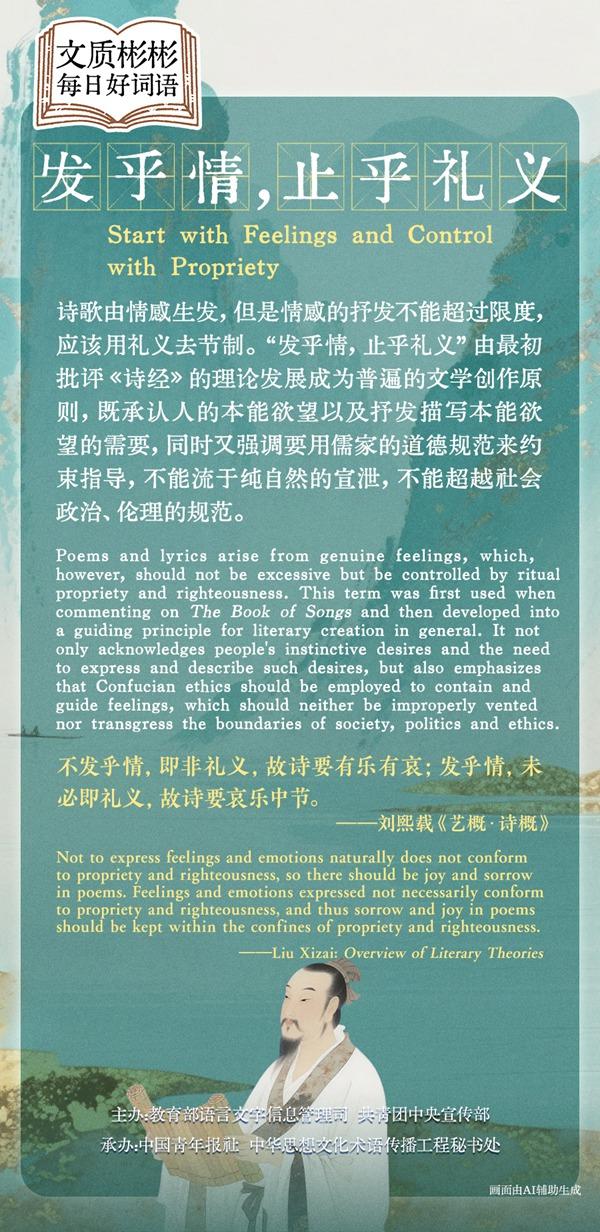
诗歌由情感生发,但是情感的抒发不能超过限度,应该用礼义去节制。“发乎情,止乎礼义”由最初批评《诗经》的理论发展成为普遍的文学创作原则,既承认人的本能欲望以及抒发描写本能欲望的需要,同时又强调要用儒家的道德规范来约束指导,不能流于纯自然的宣泄,不能超越社会政治、伦理的规范。
Start with Feelings and Control with Propriety
Poems and lyrics arise from genuine feelings, which, however, should not be excessive but be controlled by ritual propriety and righteousness. This term was first used when commenting on The Book of Songs and then developed into a guiding principle for literary creation in general. It not only acknowledges people's instinctive desires and the need to express and describe such desires, but also emphasizes that Confucian ethics should be employed to contain and guide feelings, which should neither be improperly vented nor transgress the boundaries of society, politics and ethics.
引例 不发乎情,即非礼义,故诗要有乐有哀;发乎情,未必即礼义,故诗要哀乐中节。(刘熙载《艺概·诗概》)(不从情感中生发的,自然不会合乎礼义,所以诗歌中有快乐也有哀伤;从情感中生发的,也不一定就合乎礼义,所以诗歌的哀伤、快乐都要符合礼义规定的限度。)
Not to express feelings and emotions naturally does not conform to propriety and righteousness, so there should be joy and sorrow in poems. Feelings and emotions expressed not necessarily conform to propriety and righteousness, and thus sorrow and joy in poems should be kept within the confines of propriety and righteousness. (Liu Xizai: Overview of Literary Theories)