整理/李怡蒙 制图/ 张玉佳
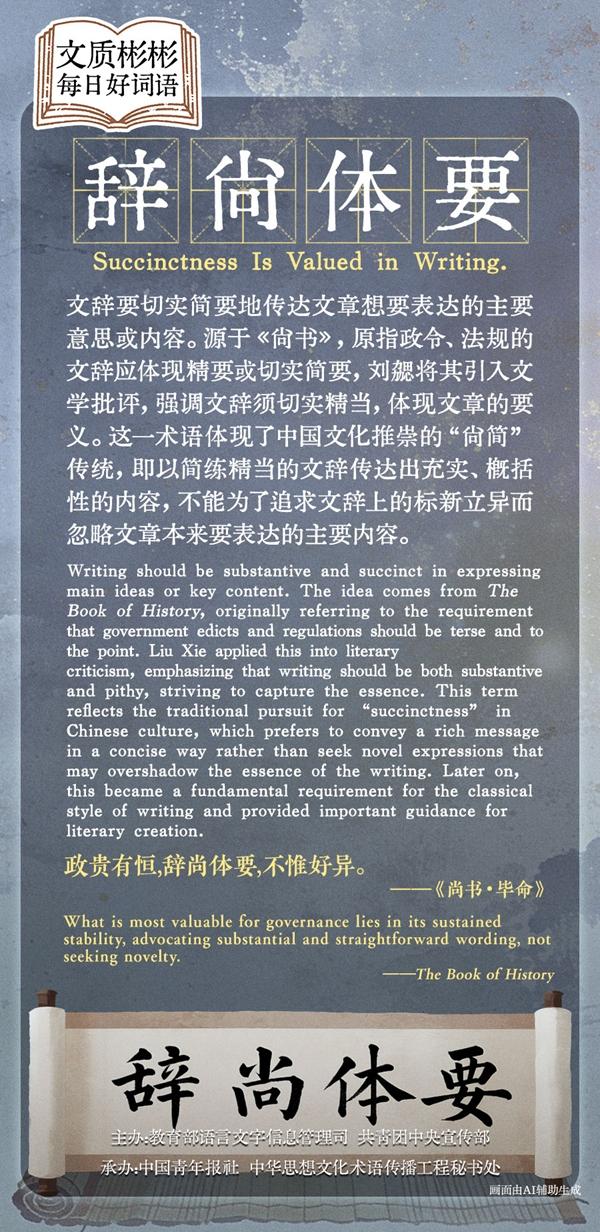
辞尚体要
文辞要切实简要地传达文章想要表达的主要意思或内容。源于《尚书》,原指政令、法规的文辞应体现精要或切实简要。刘勰将其引入文学批评,强调文辞须切实精当,体现文章的要义。这一术语体现了中国文化的“尚简”传统,即以简练精当的文辞传达充实、概括性的内容,不能为了追求文辞上的标新立异而忽略文章本来要表达的主要内容。
Succinctness Is Valued in Writing
Writing should be substantive and succinct in expressing main ideas or key content. The idea comes from The Book of History, originally referring to the requirement that government edicts and regulations should be terse and to the point. Liu Xie applied this into literary criticism, emphasizing that writing should be both substantive and pithy, striving to capture the essence. This term reflects the traditional pursuit for "succinctness" in Chinese culture, which prefers to convey a rich message in a concise way rather than seek novel expressions that may overshadow the essence of the writing. Later on, this became a fundamental requirement for the classical style of writing and provided important guidance for literary creation.
引例
政贵有恒,辞尚体要,不惟好异。(《尚书·毕命》)(政令贵在稳定持久,言辞贵在简炼扼要,不能一味追求标新立异。)
What is most valuable for governance lies in its sustained stability, advocating substantial and straightforward wording, not seeking novelty. (The Book of History)