求同存异
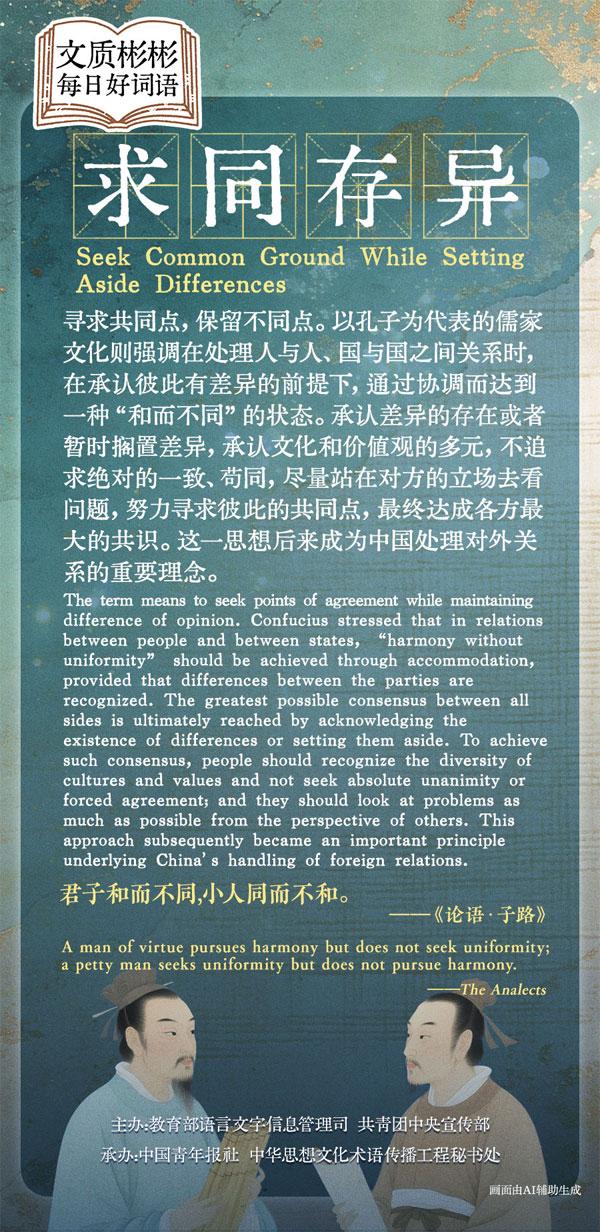
寻求共同点,保留不同点。以孔子为代表的儒家文化强调在处理人与人、国与国之间关系时,在承认彼此有差异的前提下,通过协调达到一种“和而不同”的状态。承认差异的存在或者暂时搁置差异,承认文化和价值观的多元,不追求绝对的一致、苟同,尽量站在对方的立场去看问题,努力寻求彼此的共同点,最终达成各方最大的共识。这一思想后来成为中国处理对外关系的重要理念。
Seek Common Ground While Setting Aside Differences
The term means to seek points of agreement while maintaining difference of opinion. Confucius stressed that in relations between people and between states, "harmony without uniformity" should be achieved through accommodation, provided that differences between the parties are recognized. The greatest possible consensus between all sides is ultimately reached by acknowledging the existence of differences or setting them aside. To achieve such consensus, people should recognize the diversity of cultures and values and not seek absolute unanimity or forced agreement; and they should look at problems as much as possible from the perspective of others. This approach subsequently became an important principle underlying China's handling of foreign relations.
引例
君子和而不同,小人同而不和。(《论语·子路》)(君子与人和谐相处却不会盲目迎合附和,小人表面迎合附和,但内心却往往没有和谐友善的态度。)
A man of virtue pursues harmony but does not seek uniformity; a petty man seeks uniformity but does not pursue harmony. (The Analects)